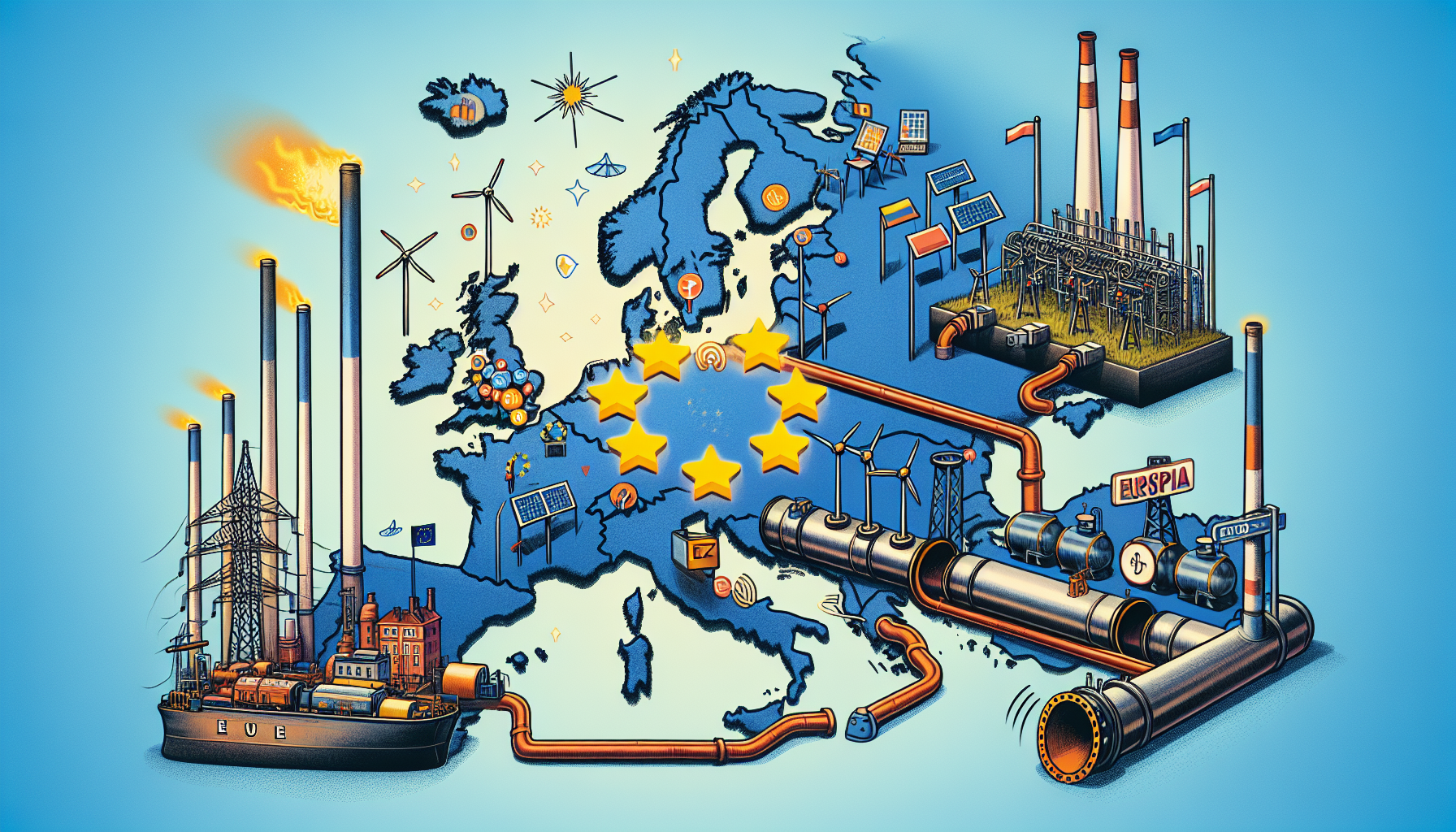

Europe’s Energy Shift: How the EU is Reducing Its Dependence on Russian Resources
The war in Ukraine has dramatically reshaped Europe's energy landscape. In response, the European Union (EU) has taken aggressive steps to reduce its reliance on Russian energy imports and bolster its energy security. Before the conflict, Russia supplied nearly 40% of the EU’s natural gas and 27% of its crude oil, making it a dominant energy provider in Europe. However, by 2024, these numbers have plummeted significantly.
How has Europe adapted to this seismic shift in energy policy? Let’s take a closer look at the major changes taking place across the continent.
1. Natural Gas Imports: A Drastic Shift
LNG Replacing Pipeline Gas
To compensate for the loss of Russian gas, Europe has ramped up its imports of liquefied natural gas (LNG). The United States has emerged as Europe’s largest LNG supplier, with imports increasing by over 140% in 2023. Other key suppliers include Qatar and Norway, with Norway now serving as the EU’s primary natural gas provider, filling much of the void left by Russia.
LNG Infrastructure Expansion
To handle the surge in LNG imports, European countries have accelerated the construction of LNG terminals. Germany, which previously had no LNG terminals, has now opened multiple facilities. Meanwhile, Poland, the Netherlands, and Italy have all expanded their LNG capacities to ensure a steady gas supply.
Strategic Gas Storage
Europe also took preemptive steps to stockpile natural gas ahead of winter. By the end of 2023, the EU’s gas storage levels exceeded 90% capacity, helping to prevent severe shortages and price volatility during colder months.
2. Accelerating the Clean Energy Transition
Renewables on the Rise
As a long-term solution to energy independence, European nations have significantly increased investments in solar and wind energy. In 2023, Germany expanded its solar capacity to over 40 GW, while Spain and the Netherlands made substantial progress in scaling wind energy projects.
RePowerEU Plan in Action
The RePowerEU initiative, introduced in 2022, has set ambitious goals to increase renewable energy’s share to 45% by 2030. To achieve this, the EU is streamlining approval processes for clean energy projects and providing financial incentives for large-scale solar and wind farms.
3. Banning Russian Oil and Coal
Russian Crude Oil: Off the Table
In December 2022, the EU enacted a complete embargo on Russian crude oil imports, alongside a $60-per-barrel price cap on Russian exports. This policy has significantly cut Russia’s oil revenues, reducing its energy earnings by approximately 50% compared to pre-war levels.
Coal Imports Halted
Russian coal imports were also banned completely, forcing European industries and power producers to shift toward alternative suppliers. Countries like Australia, Indonesia, and the U.S. have stepped in to fill this gap.
4. Short-Term Adjustments: Energy Security Takes Priority
Reactivating Coal Plants
Some European nations, including Germany and Poland, made the difficult decision to temporarily reopen coal-fired power plants to stabilize energy supplies. While this helped ease immediate energy shortages, it also reignited concerns over rising carbon emissions.
Nuclear Power: A Strategic Asset
France continues to rely on nuclear power, announcing plans to build new reactors to ensure longer-term energy security. Germany, despite its nuclear phase-out policy, delayed the closure of its remaining reactors to manage energy demand effectively.
5. Energy Efficiency Campaigns
Encouraging Energy Conservation
European governments have emphasized energy-saving measures. In Germany, public buildings were restricted to a maximum temperature of 19°C (66°F) during winter to conserve fuel. Street lighting and signage were also reduced in major cities, contributing to lower consumption.
Industrial Energy Efficiency
Heavy industries are being incentivized to adopt energy-efficient technologies, with new government policies promoting smarter, more sustainable energy use.
6. Electricity Market Reforms & Price Stabilization
Overhauling the Energy Market
To tackle price volatility, the EU is considering reforms that decouple electricity prices from gas costs, making renewable energy more competitive and stabilizing consumer electricity prices.
Joint Gas Purchasing Strategy
To maximize purchasing power and secure lower energy costs, EU member states have implemented joint gas purchasing agreements. This initiative has strengthened bargaining power in global energy negotiations.
The Road Ahead for Europe’s Energy Independence
The EU's strategy to reduce dependence on Russian energy has seen notable success. By 2024, Russian gas imports accounted for less than 10% of Europe’s total supply, marking a dramatic decline from 40% in early 2022.
Moving forward, Europe's energy security will rely on continued investment in renewables, infrastructure resilience, and efficiency measures. However, challenges remain, particularly around high energy costs and ensuring stable winter supplies.
The energy transition is in full swing, and Europe is proving that strategic diversification and sustainable energy adoption are key to navigating geopolitical uncertainties. Will these reforms be enough to secure Europe's long-term energy future? Only time will tell.
Stay Informed on Europe’s Energy Transition
For more insights on energy markets and policy shifts, subscribe to our newsletter and follow the latest updates on Fortune Energy.