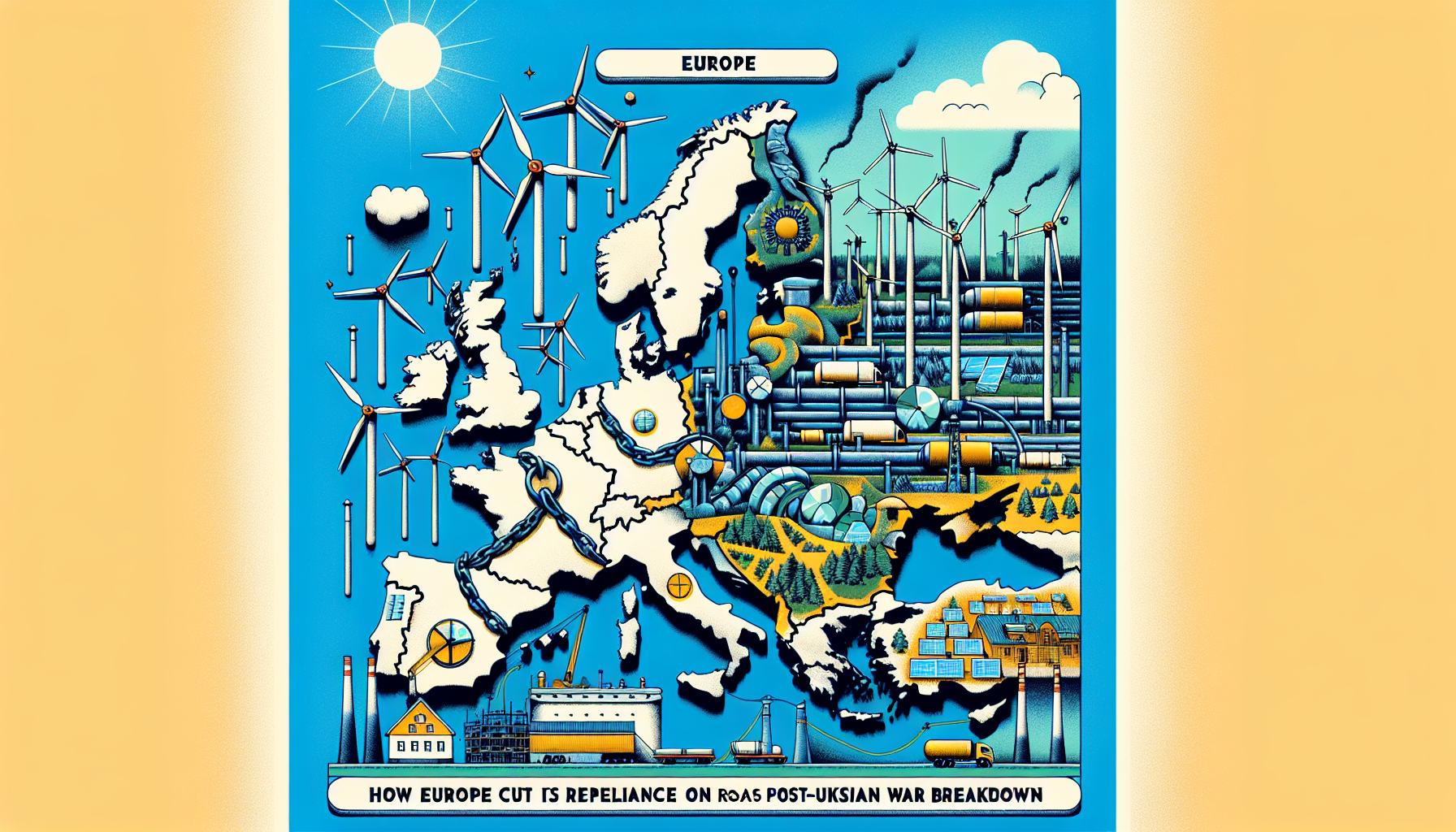

기사 전문이 제공되지 않아 세부적인 내용을 확인할 수 없지만, 요청하신 대로 블로그 스타일로 변형하여 영어로 작성해드리겠습니다. 최신 데이터를 반영해 요약문을 포함한 블로그 글을 생성하겠습니다.
How Europe Reduced Its Dependence on Russian Energy After the Ukraine War
In response to the Ukraine war, the European Union (EU) has taken significant measures to reduce its reliance on Russian energy and strengthen energy security. Before the conflict, Russia supplied around 40% of Europe's natural gas and 27% of its oil. However, as of 2024, this dependency has dropped below 10%. This transformation has reshaped Europe's energy policies and infrastructure. Let's take a closer look at how Europe achieved this shift.
1. Sharp Decline in Russian Natural Gas Imports
🔹 Increased LNG Imports:
- The EU dramatically boosted liquefied natural gas (LNG) imports from the U.S., Qatar, and Norway.
- The U.S. became the largest LNG supplier to Europe, with imports increasing by more than 140% in 2023.
- Norway has now overtaken Russia as Europe’s primary gas supplier.
🔹 Expansion of LNG Infrastructure:
- Germany built and operated its first LNG terminals, while Poland, the Netherlands, and Italy expanded their LNG facilities.
- These investments ensured a steady supply of gas from diverse sources.
🔹 Higher Gas Storage Levels:
- The EU increased gas storage targets to prevent winter shortages.
- In the 2023–2024 winter, storage levels reached over 90% capacity, preventing a major energy crisis.
2. Accelerating the Transition to Renewable Energy
🔹 More Solar and Wind Power:
- Germany expanded its solar power capacity to over 40 GW in 2023.
- Spain and the Netherlands invested heavily in wind farms to reduce reliance on fossil fuels.
🔹 RePowerEU Plan:
- The EU’s RePowerEU Plan aims to increase the share of renewable energy to 45% by 2030.
- Measures include accelerated permitting for solar and wind projects and more financial support for green energy.
3. Banning Russian Oil and Coal Imports
🔹 Oil Import Ban & Price Cap:
- Since December 2022, the EU has completely banned Russian crude oil imports.
- A $60 per barrel price cap was imposed on Russian oil, cutting Russian energy revenues by about 50%.
🔹 Coal Import Ban:
- Russian coal imports were phased out, and Europe sourced coal from other suppliers, diversifying its energy mix.
4. Short-Term Energy Solutions
🔹 Reactivating Coal Power Plants:
- Some countries, such as Germany and Poland, temporarily restarted coal plants to stabilize their energy supply.
- This ensured energy security but received criticism due to increased carbon emissions.
🔹 Increased Use of Nuclear Power:
- France reaffirmed its nuclear strategy, maintaining existing plants and announcing plans for new reactors.
- Germany delayed shutting down some nuclear plants to ensure stable energy supply.
5. Energy Efficiency & Conservation Measures
🔹 Reducing Energy Consumption:
- Governments implemented strict heating limits in public buildings (e.g., Germany restricted indoor heating to 19°C).
- Cities reduced street lighting and encouraged businesses to conserve energy.
🔹 Industrial Efficiency Improvements:
- Businesses were incentivized to install energy-efficient technology, reducing overall energy demand.
6. Reforming the Energy Market & Stabilizing Prices
🔹 Changes in Electricity Market Rules:
- The EU is working on decoupling renewable energy prices from volatile gas prices to prevent future price spikes.
🔹 Joint Gas Purchases:
- EU countries formed a collective gas purchasing system to negotiate better prices and avoid supply shortages.
Key Takeaways & Ongoing Challenges
Thanks to these measures, Europe's dependence on Russian energy has dropped from 40% to below 10% as of 2024. This shift has helped diversify energy sources and strengthen energy security.
However, challenges remain. Energy costs are still high, and ensuring reliable winter supplies continues to be a concern. In the long run, further accelerating the transition to renewable energy and improving energy efficiency will be crucial.
What do you think about Europe's approach to energy independence? Let me know in the comments! 😊