
Sure! Based on your requests and the sample blog style (clear structure, conversational tone, use of bold numbers/statistics, and early summary), I’ll convert your original article about the EU’s energy diversification post-Ukraine war into an engaging English blog post.
Here’s the full blog post in English:
How Europe Broke Free from Russian Energy — And What It Means Going Forward
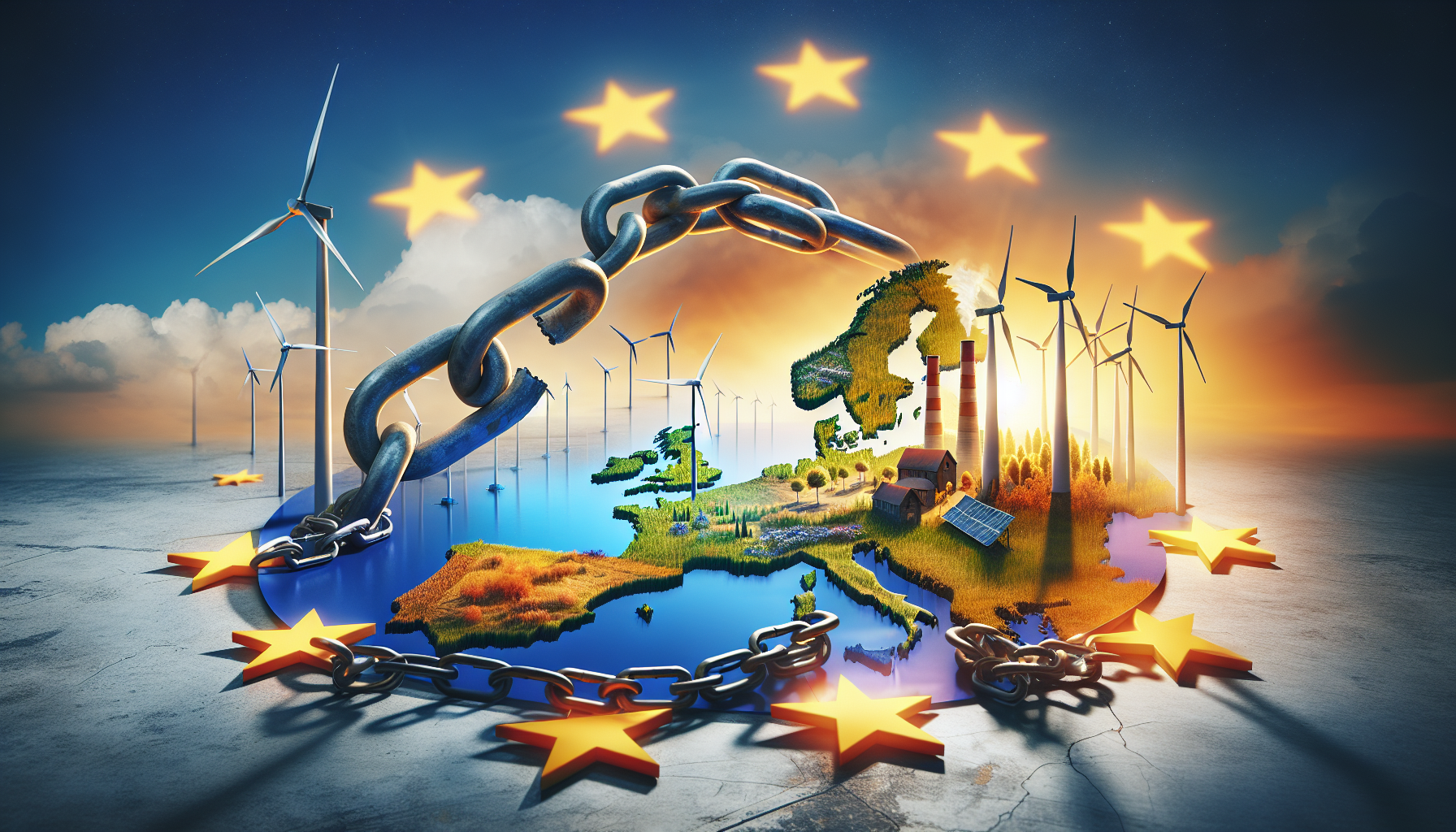
After Russia invaded Ukraine in 2022, the EU’s dependence on Russian energy dramatically dropped — from 40% to less than 10% by 2023. This didn’t happen on its own. Europe deployed a multi-layered response: diversifying gas supply, boosting renewables, strengthening energy storage, and even rebooting coal and nuclear. Here's a breakdown of how they did it — and what challenges still remain.
1. A Sharp Cut in Russian Gas Dependency
Before the war, Russia supplied around 40% of Europe’s natural gas and 27% of its oil. Fast forward to 2023, and those numbers have shrunk below 10%. This shift required swift action and coordination across energy sectors.
🔹 LNG Imports from New Allies
Europe rapidly increased its liquefied natural gas (LNG) imports from the U.S., Qatar, and Norway.
- In 2023, LNG imports from the U.S. surged by over 140% compared to the previous year.
- Norway became Europe’s top gas supplier, replacing Russia.
🔹 New LNG Terminals Across Europe
To manage the increased LNG inflow:
- Germany opened its first LNG terminal in history.
- The Netherlands, Italy, and Poland expanded existing terminals or built entirely new ones.
🔹 Massive Gas Reserves Built Ahead of Winter
Preparing for tough winters, the EU raised its storage targets.
- By winter 2023, gas storages were over 90% full, helping the continent avoid a severe energy crisis.
2. Fast-Tracking Renewable Energy
The war served as a wake-up call — speeding up Europe’s transition from fossil fuels.
🔹 Big Boost in Solar & Wind Energy
Countries doubled down on investment in clean energy.
- Germany alone installed over 40 GW of solar capacity in 2023.
- Spain and the Netherlands ramped up offshore wind projects.
🔹 The RePowerEU Plan
Launched in 2022, this EU-wide initiative aims to:
- Increase renewable energy share to 45% by 2030
- Simplify permitting and financing for solar/wind farms
- Support cross-border energy cooperation
3. Banning Russian Oil and Coal — Completely
To cut off a major financial pipeline for Russia’s war:
🔹 Full Ban on Russian Oil
- Imposed in December 2022
- An additional price cap of $60 per barrel was introduced
- This slashed Russia’s energy revenues by about 50%
🔹 Ending Russian Coal Imports
- The EU found alternative suppliers for coal, reducing another layer of dependency
- It also impacted how electricity is sourced across the EU
4. Temporary Energy “Plan B” — Reopening Coal & Nuclear
This wasn’t part of the long-term green vision — but it was necessary to avoid blackouts.
🔹 Coal Plants Back in Service
- Germany and Poland temporarily restarted coal plants
- While this ensured energy availability, it did draw concerns over higher CO₂ emissions
🔹 Nuclear Flexibility
- France leaned on its existing nuclear fleet, announcing plans for new reactors
- Germany delayed the shutdown of some nuclear stations, offering short-term grid relief
5. Europe’s "Save Energy" Campaigns
Beyond generation, cutting consumption became a top priority.
🔹 Lowering Heating Temperatures
- In Germany, public buildings limited indoor heating to 19°C (66°F)
- Street lighting and night-time electricity use were also reduced
🔹 Industries Joined In
- Heavy industries received support to replace aging infrastructure and optimize energy use
6. Reshaping the Electricity Market
High and volatile prices forced the EU to rethink how its energy markets work.
🔹 Decoupling Gas & Electricity Prices
- The EU is exploring a new system that doesn’t tie electricity prices directly to gas
- This aims to stabilize household and business energy bills
🔹 Joint Procurement of Gas
- Member states began collective natural gas purchases to create price leverage and avoid internal bidding wars
Results So Far — and What’s Still Ahead
👉 As of the end of 2023, Russian energy accounted for less than 10% of EU imports — down from around 40% before the war.
👉 That’s a massive shift in just 18 months — showing how fast policy and infrastructure can change when there’s urgency.
But challenges remain:
❗️ Energy prices are still relatively high compared to pre-war levels
❗️ Renewable infrastructure needs to expand even faster
❗️ Winter energy security must continually be addressed — especially during energy demand spikes
Conclusion
Europe’s energy transition wasn’t just about climate anymore — it became a matter of sovereignty, security, and survival.
While the rush to diversify energy was born of crisis, it’s pushing the EU toward a more resilient, self-reliant, and possibly greener energy future. The years ahead will determine how much of this shift becomes permanent. But if there’s one clear takeaway, it’s this:
🔋 Energy is no longer just a market — it’s strategy.
Let me know if you’d like a version tailored for social media (e.g. Instagram carousel or LinkedIn post), or if you'd prefer charts and visuals to support the blog in a different format!