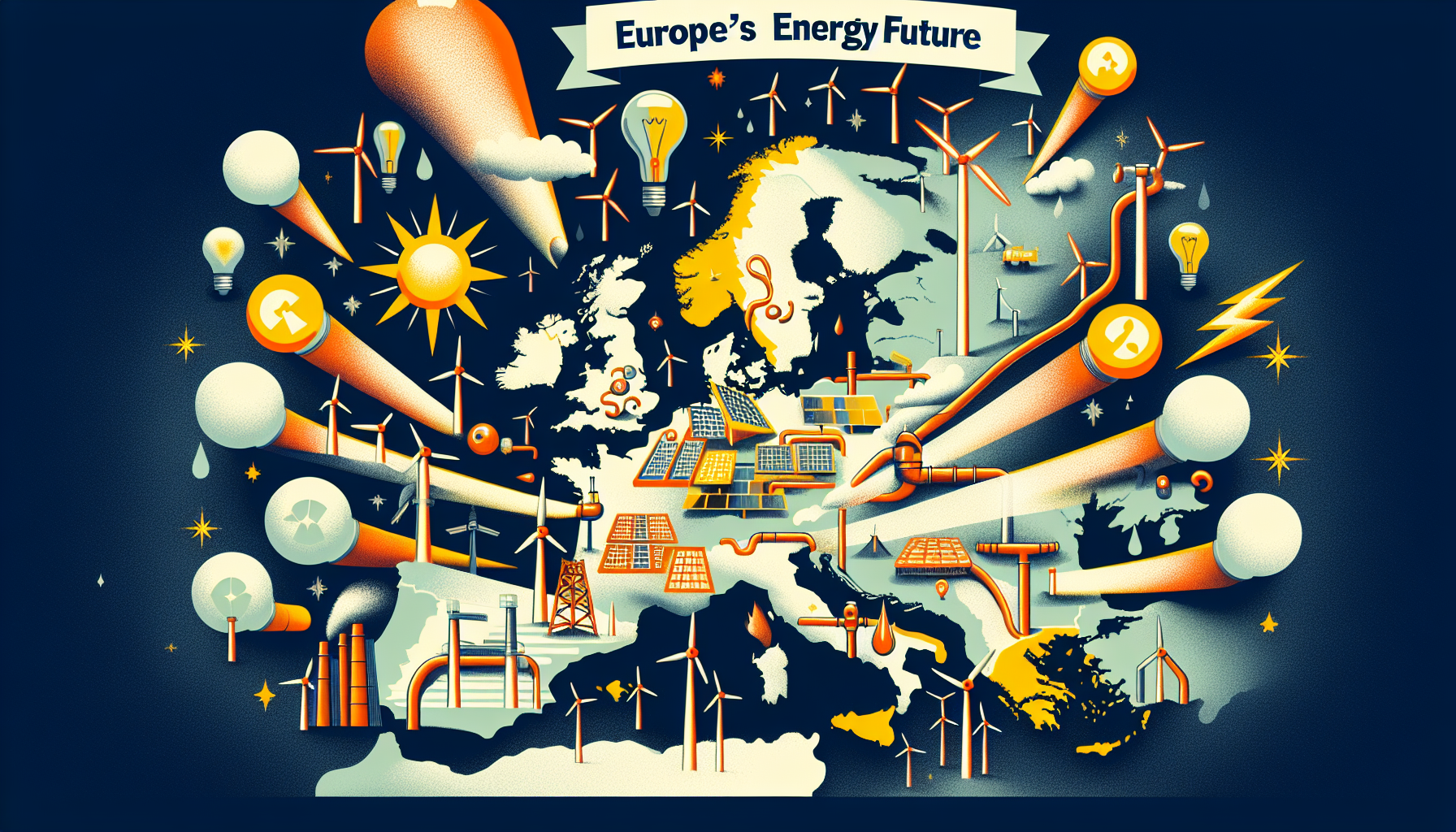

Sure! Based on the detailed reference article you mentioned earlier on the EU’s evolving energy landscape since the Ukraine war, and emulating the blog style and structure you showed in the Taylor Swift Swiftonomics example, here is the transformed blog post in English, designed to highlight the key data and be accessible, engaging, and blog-friendly in tone and structure:
🇪🇺 How Europe's Energy Map Was Redrawn After the Ukraine War
A look at how the EU rapidly reduced its reliance on Russian energy — and what it means for the future of European power.
After Russia’s invasion of Ukraine, the European Union faced a historic energy crisis. At the time, around 40% of the EU’s natural gas and 27% of its oil came from Russia. Today, those numbers have plummeted — and the continent has undergone one of the fastest energy policy shifts in modern history. Here's how Europe diversified, adapted, and accelerated its green transition.
Let’s break it down 👇
- Russian Gas Dependency? Cut Drastically.
In 2021, Russia was Europe’s largest energy supplier. That changed almost overnight.
- 🇺🇸 LNG imports from the U.S. surged: Europe imported 140% more U.S. LNG in 2023 compared to the previous year.
- 🇳🇴 Norway stepped up: It is now Europe's biggest pipeline gas supplier, replacing Russia.
- 🇪🇺 EU gas reserves were 95% full by November 2023 — a record high, ensuring stable winter energy supplies.
To make it happen, EU countries rapidly expanded their LNG infrastructure:
- 🇩🇪 Germany opened its very first LNG terminal.
- 🇵🇱 Poland, 🇳🇱 Netherlands, 🇮🇹 Italy, and others added or upgraded existing LNG facilities.
- Massive Push for Renewable Energy
The energy crisis fast-tracked Europe's green ambitions.
- ☀️ Germany installed over 40 GW of solar capacity in 2023 alone.
- 🌬️ Spain and the Netherlands ramped up investment in wind farms.
- 📈 Under the RePowerEU plan, the EU targets 45% renewable energy by 2030.
How they’re doing it:
- Faster permit approvals for renewable projects
- Billions in subsidies for large-scale solar and wind installations
- Ban on Russian Oil and Coal
To choke off Russian energy revenues, the EU took historic steps:
- 🛢️ As of December 2022, the EU banned nearly all Russian seaborne oil.
- 💰 A $60-per-barrel price cap on Russian crude was imposed by the G7 and EU.
— Result: Russia’s oil export revenue fell nearly 50% by late 2023. - ⛏️ EU countries also banned Russian coal, shifting imports to Australia, Colombia, and the U.S.
- Temporary Return of ‘Dirty’ Alternatives
A short-term compromise to avoid winter blackouts.
- 🏭 Germany and Poland brought some coal power plants back online.
- ⚛️ France leaned heavily on nuclear energy, keeping its 56 reactors steady and announcing new builds.
- 🇩🇪 Germany delayed some nuclear phase-outs to maintain energy stability.
This move was controversial. It solved short-term problems but raised concerns about emissions.
- Energy-Saving Mode: ON
The EU launched massive energy efficiency campaigns.
- 🔥 Germany limited public heating to 19°C (66°F) in offices.
- 💡 Cities dimmed streetlights and cut public building lighting.
- 🏢 Incentives rolled out to factories to reduce industrial electricity use
This helped reduce demand. Overall gas consumption in the EU dropped by over 15% in 2023 compared to average levels from 2017–2021.
- Reforming the Power Market
To prevent future price spikes and protect consumers:
- 💶 The EU proposed de-coupling electricity prices from volatile gas prices.
- 🤝 A new joint gas purchasing platform was launched to strengthen bargaining power and avoid intra-EU bidding wars.
📉 By late 2023, wholesale electricity prices dropped more than 40% year-over-year.
📊 The Big Picture: Russia’s Energy Grip on the EU Collapsed
🏁 Russian gas share in EU energy mix:
→ Pre-war (2021): 40%
→ End of 2023: below 10%🎯 EU climate targets now more urgent than ever, with energy security and pricing top of mind.
🌱 What Comes Next?
The immediate risks of energy shortages have eased, but challenges remain:
- High energy costs still hit businesses and households
- Renewables must scale up faster to fully replace fossil fuels
- Infrastructure (like power grids) needs EU-wide upgrades
Final Thoughts
Europe’s response to the Ukraine war wasn’t just geopolitical — it was also a massive economic and infrastructure overhaul. In less than two years, the EU:
✅ Cut Russian fossil fuels dramatically
✅ Boosted green energy investment
✅ Modernized energy alliances (with the U.S., Norway, and more)
✅ Changed how millions of people consume and pay for energy
Whether this transition becomes a permanent shift or a temporary workaround depends on how fast Europe can turn ambition into clean, affordable reality.
👀 What’s your take — should more countries follow the EU’s energy playbook?
Let me know if you'd like a Korean translation of this version or want it integrated into a specific website/blog template!