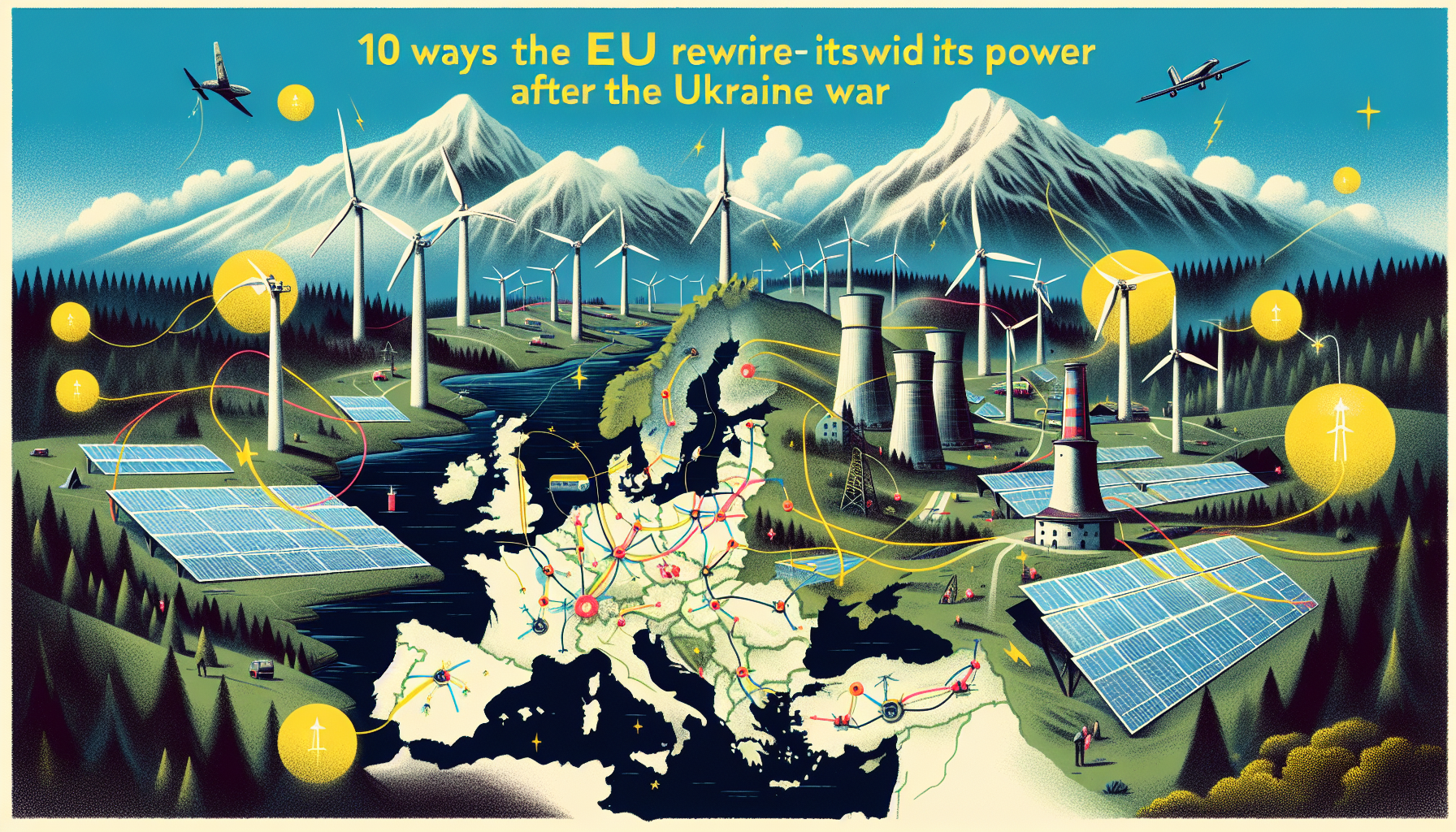

Sure! Based on your request and writing style, I'll write an English blog post that emulates the engaging, numeric-driven, and semi-personal tone you're looking for. Below is a blog-style transformation of the provided article content regarding the EU's energy transition after the Ukraine war, formatted similarly to the Taylor Swift (Swiftonomics) blog post you referenced.
🇪🇺 Europe’s Energy Revolution: How the EU Cut Russian Gas and Ramped Up Renewables
After the war in Ukraine, Europe made a bold energy pivot — slashing Russian imports, boosting LNG from allies like the U.S., and turbocharging renewable investments. Today, Russian energy makes up less than 10% of EU imports — a dramatic drop from 40% just a decade ago.
Let’s break it down by the numbers.
🌍 1. Russian Energy? Drastically Reduced
Before 2022, Russia provided:
- 40% of the EU’s natural gas
- 27% of its oil
- 46% of its coal
Now? As of 2023:
- Russian natural gas accounts for less than 10% of EU imports
- Oil imports from Russia have dropped nearly 90%
- Coal imports are almost entirely eliminated
✳️ Key strategies Europe used to make the shift:
🚢 2. A Surge in LNG (Liquefied Natural Gas)
- U.S. LNG imports to Europe increased by over 140% in 2023 compared to 2021
- The U.S. is now Europe’s largest LNG supplier
- Norway overtook Russia as the EU’s #1 gas source
And how did they manage this influx of LNG so quickly?
🏗️ 3. Massive Expansion of LNG Infrastructure
- Germany opened its first-ever LNG terminals in 2022
- Poland, the Netherlands, and Italy expanded their existing terminals
- Floating Storage Regasification Units (FSRUs) were rapidly deployed
- Europe’s LNG regasification capacity rose by over 30% in a single year
🧊 4. Winter is Coming? Europe Planned Ahead
- Gas storage filling target was raised to 90%
- By winter 2023–2024, Europe had reached over 97% storage capacity
- Result: No major blackouts or gas shortages during the winter months
☀️ 5. A Green Acceleration: Renewables Go Full Speed
To cut not just Russian energy — but fossil fuels altogether — Europe sped up its energy transition:
⚡ Solar and Wind Energy Numbers in 2023:
- Germany installed over 40 GW of new solar
- Spain and the Netherlands doubled down on wind power
- Renewables made up 41% of the EU’s electricity generation
♻️ RePowerEU Plan Goals by 2030:
- 45% of total energy consumption from renewables
- Faster permitting process for solar/wind projects
- Over €300 billion investment in clean energy infrastructure
🛢️ 6. Oil and Coal from Russia? Banned and Replaced
🚫 From December 2022:
- EU banned all seaborne Russian oil imports
- Put a G7+ price cap of $60 per barrel on Russian oil exports
- Russia’s oil revenues are down nearly 50% from pre-war levels
💣 Also: Russian coal imports? Gone
- Europe shifted to the U.S., Australia, and South Africa for coal
- Power mix diversified with more renewables and nuclear
🏭 7. Temporary Workarounds (But Controversial Ones)
- Coal power plants were briefly reactivated in Germany, Poland, and others
- France kept its nuclear fleet online & announced new reactors
- Germany delayed its nuclear phase-out to maintain flexibility
💡 8. Energy Efficiency Campaigns Went Public
Governments and citizens alike were asked to conserve:
🔥 For Example:
- Germany limited heating in public buildings to 19°C
- Streetlights and façade lighting reduced in multiple cities
- Public campaigns pushed citizens to lower thermostats and insulate homes
🏢 Industries Were Also Targeted:
- Energy-intensive sectors were given incentives to reduce use
- Efficiency upgrades supported with EU funds
⚙️ 9. Fixing the Electricity Market
🏛️ Market Reforms Underway:
- Current system links electricity prices to gas (which caused spikes)
- EU plans to disconnect renewable power pricing from volatile gas markets
- Goal: stabilize prices for consumers and reduce energy inflation
🛒 10. Joint Gas Purchasing for Bargaining Power
- EU-wide platform launched to buy gas collectively
- Reduced vulnerability to price manipulation
- Improved storage coordination between member states
🔚 Final Results So Far?
Thanks to coordinated action:
- Russian fossil fuel imports dropped from 40% of EU energy to under 10%
- European LNG imports reached a record 134 bcm in 2023 (up from 80 bcm in 2021)
- Renewable electricity share hit 41%, greenest year on EU record
- Gas prices tumbled down more than 80% from 2022 highs (from €300/MWh to ~€50/MWh in late 2023)
📌 Challenges Ahead:
- Energy prices still high compared to pre-war levels
- Infrastructure gaps remain in Central & Eastern Europe
- Need to keep accelerating grid updates and green-energy investments
💬 Final Thoughts:
The Ukraine war became a turning point in Europe’s energy history. What started as a supply crisis turned into a green revolution — and while the journey isn’t over, the numbers prove one thing: when urgency meets unity, transformation is possible.
What remains to be seen is whether Europe can maintain this pace and truly lead the world into a renewable energy future.
If you'd like, I can also rephrase the post for different platform formats: Instagram carousel, LinkedIn article, short YouTube script, or a Twitter thread. Just let me know!