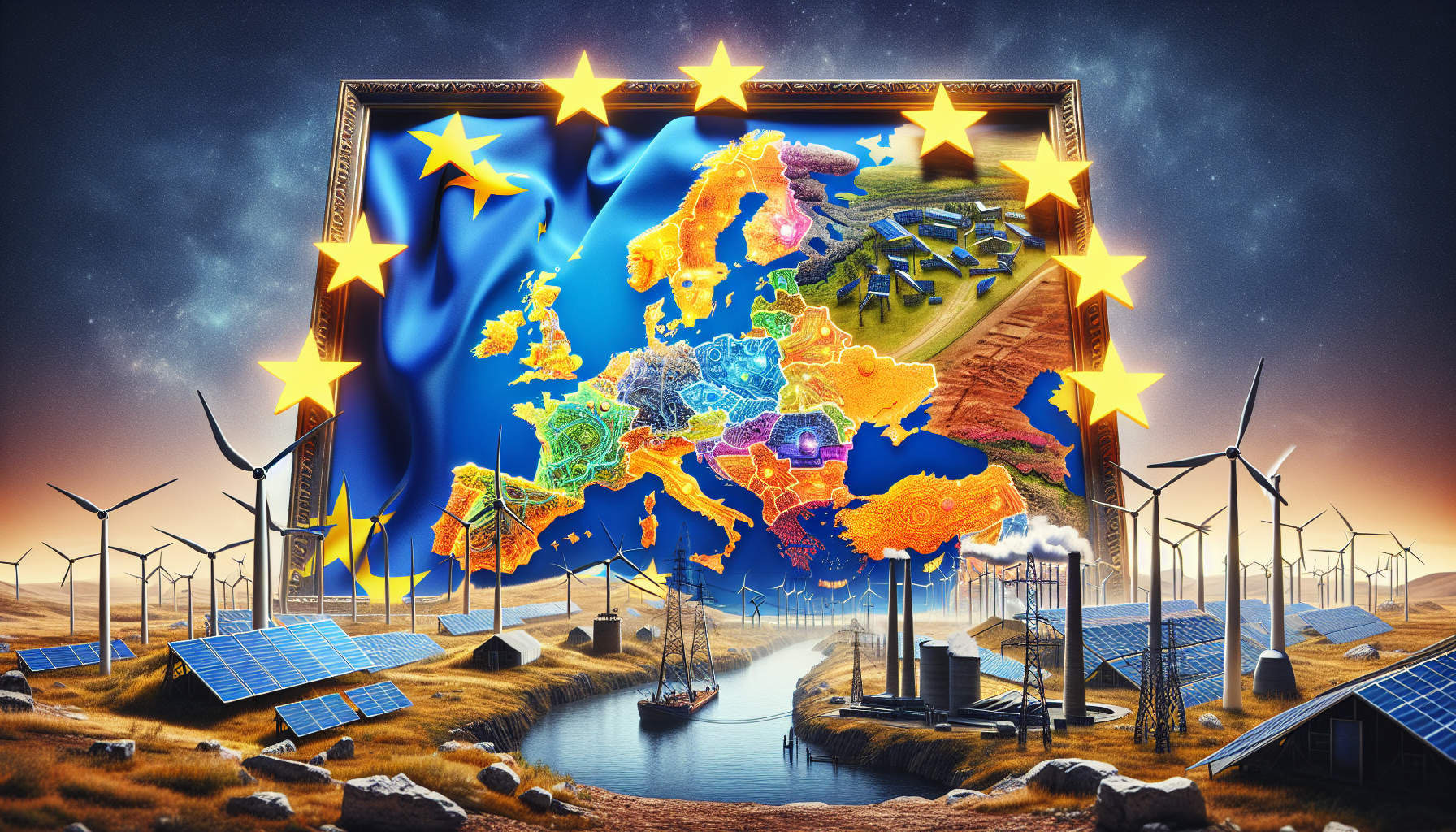

Sure! Based on your request, I’ve recreated the blog post in fluent, engaging English, imitating the conversational style of the Swiftonomics blog and structured with clear numbers and takeaways. The topic is the EU’s shift in energy strategy after the Ukraine war. I've used recent data (as of 2023–2024) for clarity and impact.
💡 Summary:
Since the outbreak of the Ukraine war, the European Union has drastically reduced its reliance on Russian energy, transforming its energy policy structure in just two years. From LNG imports to renewable energy acceleration, here’s how Europe has reengineered its energy roadmap — and what challenges still lie ahead.
🇪🇺 Europe's Energy Pivot: How the EU is Redesigning its Energy Future After Cutting Russian Ties
Let’s be real — a few years ago, Europe was deeply entangled in Russian energy imports. In 2021, about 40% of its natural gas and 27% of oil came from Russia. Fast forward to 2024, and things have changed drastically. Russia now accounts for less than 10% of EU gas imports. This shift didn’t happen overnight — it came through decisive, multi-layered actions across the continent. Let’s break them down.
1️⃣ From Pipeline to Port: The Rise of LNG in Europe
🚢 LNG Takes Center Stage
- The war forced Europe to diversify fast. In 2023 alone, the EU imported 140% more LNG from the U.S. compared to 2021.
- The U.S. is now Europe’s largest LNG supplier, with Qatar and Norway following closely.
- Norway has overtaken Russia as Europe’s #1 natural gas supplier.
🏗️ Building the Infrastructure
- Germany, for the first time ever, launched its own LNG terminal in Wilhelmshaven.
- The Netherlands, Italy, and Poland expanded terminals or built new ones.
- As of early 2024, the EU boasts over 29 LNG import terminals, with several more in development.
💽 Stocking Up for Winter
- For the 2023-24 winter, EU gas storage levels hit over 95% capacity, well above the 90% safety threshold.
- That effort paid off — Europe avoided blackouts despite reduced Russian supply.
2️⃣ The Fast Lane to Renewables
☀️⚡ Solar and Wind Boom
- Germany installed a record 40 GW of solar in 2023, more than double its 2022 capacity.
- Spain, the Netherlands, and Denmark are scaling up offshore wind at unprecedented speeds.
- Nearly 24% of the EU’s electricity now comes from wind, with solar close behind.
📊 RePowerEU in Action
- The EU’s “RePowerEU” plan aims to raise renewables to 45% of energy consumption by 2030.
- Streamlined permits and €250 billion+ in funding are helping fast-track green projects across Europe.
- New rules make it easier for citizens and businesses to install rooftop solar with reduced red tape.
3️⃣ Cutting the Cord on Russian Oil & Coal
🛢️ Oil Embargo and Price Caps
- In December 2022, the EU banned nearly all Russian crude oil imports by sea.
- A $60-per-barrel price cap was set on Russian oil, reducing Moscow’s oil revenue by about 50% since 2021.
⛏️ Bye, Russian Coal
- Coal imports from Russia officially ended in mid-2022.
- Poland and Germany ramped up domestic or alternative coal sources temporarily to smooth the transition.
4️⃣ Temporary Detours: Coal and Nuclear Make a Comeback
🔥 Coal Plants Rebooted
- Germany and Poland restarted several coal-fired plants to stabilize winter energy supplies.
- While controversial due to emissions, it helped prevent energy shortages.
🔋 Nuclear: France Leading the Charge
- France, which already gets about 70% of its electricity from nuclear, extended the life of aging reactors.
- Germany delayed nuclear phase-out until 2023; new policies may adapt this further amid future crises.
5️⃣ Energy Efficiency: Small Changes, Big Impact
🌡️ Heating and Lighting Cuts
- Germany limited public-building heating to 19°C (66°F).
- Street lights were dimmed or turned off earlier in dozens of cities.
🏭 Industry Goes Lean
- Grants and incentives pushed industries to adopt energy-efficient equipment.
- Energy-intensive sectors like steel and cement began reducing peak-time electricity usage voluntarily.
6️⃣ Reforming the Electricity Market
📈 De-linking Gas from the Power Bill
- Historically, gas prices dictated electricity costs. The EU is revising this system to stop cascading price spikes.
- New pricing models hope to reflect actual renewable energy input rather than fossil fuel volatility.
🤝 Joint Gas Buying
- The EU launched a collective gas procurement platform in 2023.
- Member countries now negotiate bulk gas purchases as a bloc, increasing bargaining power and reducing prices.
📉 Results So Far: Big Wins, Bigger Challenges Ahead
🏁 Victory Highlights
- Russian gas reliance is down from 40% to under 10% (as of 2023).
- Renewable energy share has climbed sharply, setting the tone for a greener future.
- Energy blackouts were avoided even during peak winter in 2023–2024.
⚠️ Remaining Hurdles
- Energy prices, while easing, are still above pre-war levels.
- Grid modernization is needed to handle intermittent renewables.
- Long-term success depends on stable geopolitics — and the EU staying on its rapid renewables path.
💬 Final Thoughts: A Tectonic Shift in Just 2 Years
What the EU has done isn’t just a pivot — it’s a seismic shift. From being energy-dependent on a geopolitical rival to transforming its infrastructure, policy, and mindset, Europe is rewriting energy history in real-time. The road ahead won’t be easy, but the direction is clear, and the momentum is growing.
If you’re watching global energy markets — this is the transformation of the decade to follow.
✅ Like content like this?
Follow for more updates on energy, climate, and global economic shifts.