
Firefly Aerospace’s Historic Moon Landing: What It Means for the Future of Lunar Exploration
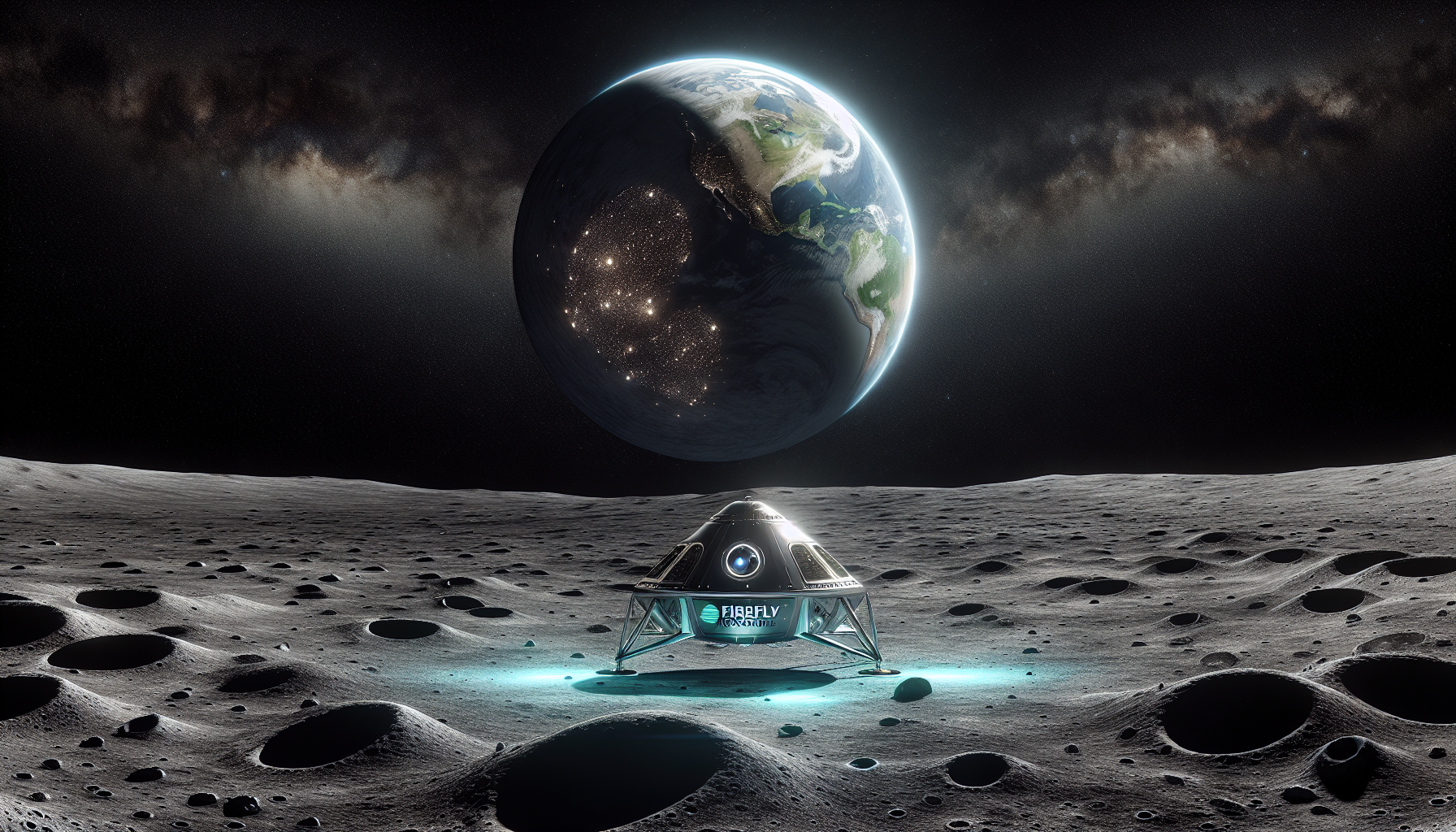
Firefly Aerospace has made history by becoming the second private company to land on the moon. Their spacecraft, Blue Ghost, successfully touched down on Mare Crisium, marking a significant shift in lunar exploration. This isn’t just another moon mission—it's the beginning of a new era where private companies play a central role in space.
1. Firefly Aerospace's Landmark Achievement
🚀 Historic Landing: On March 2, 2025, Firefly Aerospace's Blue Ghost spacecraft became the second private lander to successfully reach the moon.
🌕 Landing Site: The lander touched down in Mare Crisium, a relatively smooth plain, making it ideal for experiments.
📡 NASA Collaboration: While privately built, Blue Ghost carries 10 payloads for NASA, showing increasing cooperation between private industry and government agencies.
2. Why Moon Landings Are So Difficult
🌑 "15 Minutes of Terror": Landing on the moon requires precise navigation, self-adjusting software, and last-minute course corrections, all without human input.
💥 A History of Failures: Previous missions by India, Israel, Russia, and Japan have ended in crashes due to the extreme difficulty of lunar landings.
🛰 Elite Club: Only the U.S. (Apollo era), the Soviet Union, China, India, Japan, and one other private company (Intuitive Machines) have successfully landed on the moon before Firefly.
3. Blue Ghost’s Scientific Goals
🔬 Lunar Dust Study: The lander carries a vacuum system designed to analyze how moon dust reacts to different conditions.
🛰 GPS for the Moon: One payload is an Italian experiment aiming to improve lunar navigation, similar to GPS on Earth.
💻 Radiation-Resistant Computing: Montana State University provided a computer designed to withstand the extreme conditions of space.
4. Implications for the Future of Space Exploration
🛠 Commercial Space Industry Growth: With companies like Firefly and Intuitive Machines joining the space race, lunar exploration is no longer just for governments.
💰 Business Opportunities: Moon tourism, mining, and resource utilization could soon become profitable industries.
🌍 More Missions Coming: Firefly plans additional lunar missions, including a far-side lander scheduled for 2026.
Conclusion: A New Era in Space
Firefly's success represents more than just a moon landing—it signals the rising role of private industry in space. With more missions on the horizon and potential business models forming around the moon, we may be witnessing the birth of an entirely new space economy.
What do you think? Will private companies dominate space exploration in the future? 🚀 Let me know in the comments!