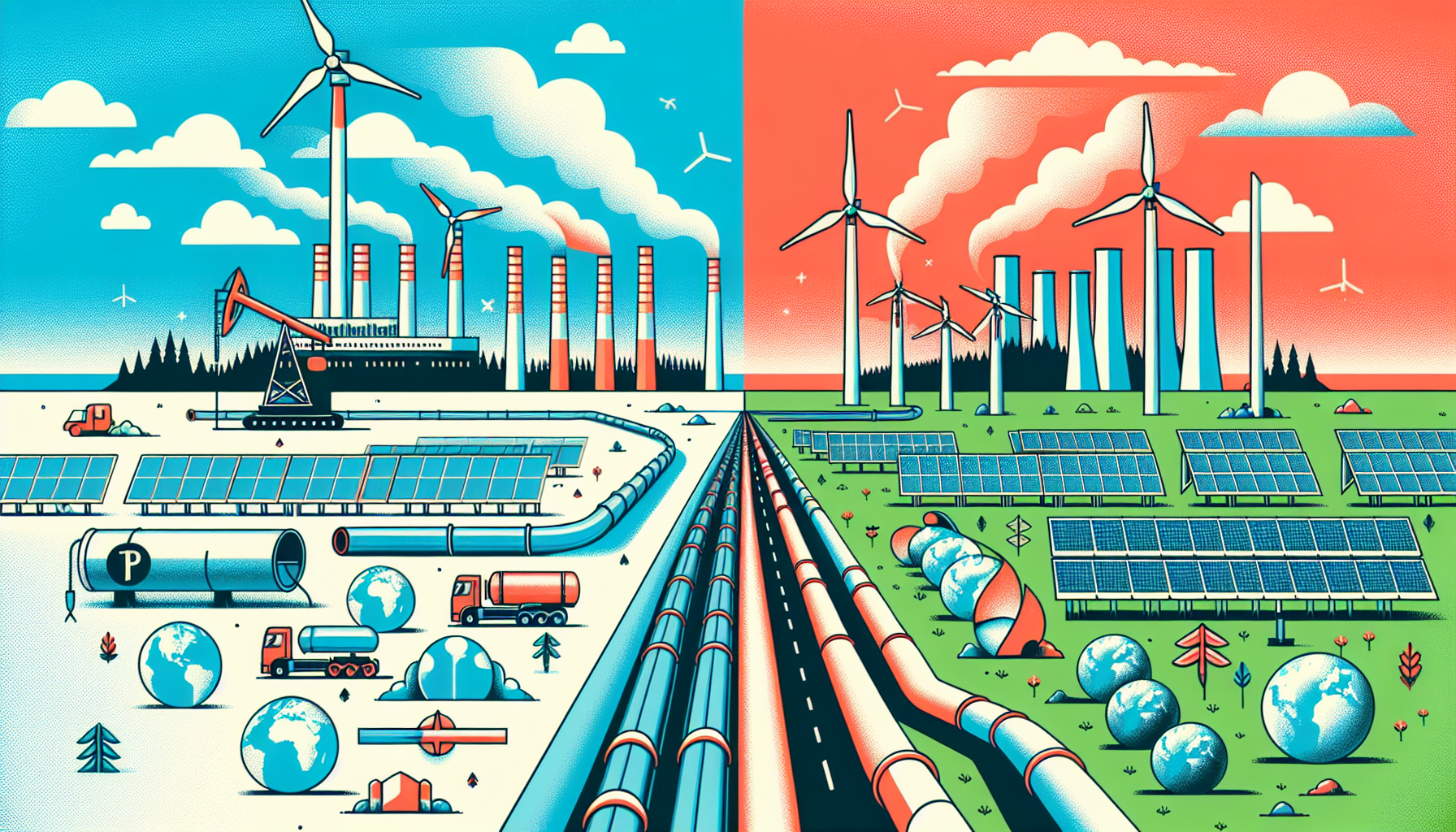

Sure! Based on your request, I will recreate the given article into a blog-style post in English, inspired by the examples you provided—with a clear, personal tone, easy-to-follow structure, and important numbers laid out clearly. I will assume that the article you are referring to discusses how the European Union responded to energy challenges after the Russia-Ukraine war. Here’s the final blog post:
🇪🇺 How Europe is Rewiring Its Energy Future: The Post-Russia Energy Shift Explained
Ever since Russia invaded Ukraine, Europe has dramatically shifted its energy strategy. Dependency on Russian energy has dropped from nearly 40% to under 10% in just a few years. But how did Europe manage such a massive transition, and what challenges remain?
As someone who keeps a close eye on global economic shifts, I found this transformation fascinating—and worth breaking down for anyone curious about how geopolitics meets energy markets.
Let’s get into the key numbers and strategies Europe used to rewrite its energy future:
- 🛢 Natural Gas Dependency? Europe Took a Sharp Turn
In 2021, around 45% of European natural gas came from Russia. Fast forward to 2023, that figure dropped to less than 15%. Here’s how:
LNG Imports Boosted:
- U.S. became Europe’s top LNG supplier in 2023
- LNG imports from the U.S. increased over 140% compared to 2021
- Norway replaced Russia as the largest pipeline gas supplier
Infrastructure Ramped Up:
- Germany opened its first-ever LNG terminal (and built several more)
- Poland, Netherlands, Italy, and others expanded port capacity
Gas Storage Levels Raised:
- EU gas storage filled to over 95% by Nov 2023—well above the 90% target
- Helped prevent winter blackouts and energy crises
- ☀️ Renewable Energy Took Center Stage
To future-proof energy supplies, the EU doubled down on renewables:
Solar and Wind Energy Deployment:
- Germany added over 40 GW of solar capacity in 2023 alone
- Spain and the Netherlands rapidly expanded wind energy farms
RePowerEU Plan:
- Announced in 2022, targets 45% renewables share by 2030
- Simplified permitting process for renewable projects
- Billions in investment toward solar, wind, and hydrogen tech
- 🚫 Ban on Russian Oil & Coal
Europe didn’t just reduce reliance—it cut ties.
Full Oil Ban from Russia:
- Began in December 2022
- Introduced a $60/barrel price cap for Russian oil
- Russia’s oil revenue reportedly fell by ~50% from pre-war levels
Coal Imports Banned:
- Completely banned by August 2022
- Replaced by imports from South Africa, Colombia, and Indonesia
- ❗ Short-Term Energy Backups (Yes, Coal Made a Comeback)
To avoid winter blackouts, some not-so-green measures were reintroduced:
Coal Plants Reactivated:
- Germany extended operations of mothballed coal plants
- Poland also resumed energy generation via coal
Nuclear Power Adjustments:
- France continued relying on nuclear for over 70% of electricity
- Germany slowed down its nuclear phase-out for grid stability
- 🔌 Energy Saving Campaigns Rolled Out
Energy security wasn’t just about supply—it was about reducing demand too.
Europe-Wide Measures:
- Public heating capped at 19°C (66.2°F) in many countries
- Street lighting reduced at night
- Awareness campaigns encouraged households to cut winter consumption
Industry Efficiency Increase:
- Governments subsidized energy-saving tech in factories
- Focus on cutting electricity and gas use in heavy industry
- 🧾 Electricity Market Reform & Joint Gas Buying
To tackle price volatility and consumer bills:
Market Reform in Progress:
- EU moved to decouple electricity prices from gas prices
- Goal: reduce price spikes during high gas demand
Joint Gas Purchasing:
- EU countries coordinated to buy gas collectively
- Reduced competition and improved price negotiation power
💡 Key Takeaway Numbers:
- 🇷🇺 Russian energy share in EU: → from ~40% (2021) to <10% (2023)
- 💨 LNG imports from the U.S.: ↑ +140% (YoY in 2023)
- 🔋 EU gas storage: >95% full ahead of 2023/24 winter
- ☀️ Germany’s solar capacity (2023): 40 GW+
- 🚫 Russian oil revenue: ↓ ~50% post sanctions
🎯 Europe’s Big Win — and Ongoing Challenges
Europe pulled off what many thought would be nearly impossible—cutting Russian energy imports to near-zero without crashing its economy. Energy prices are still high, but stable. The lights stayed on this winter. And more importantly, the continent is pushing full speed ahead into renewable territory.
But it's not a complete finish line yet.
Long term? Europe must:
- Accelerate renewable project pipelines
- Invest in grid infrastructure
- Improve cross-border energy cooperation
As someone who believes energy is the foundation of any economy, I'm genuinely stunned (in a good way) by Europe’s rapid transformation. It’s a good reminder of what can happen when politics, innovation, and the market work—somewhat—in sync.
If you’re building a global investing strategy or just want to understand how geopolitics impacts you, these stories are definitely worth watching.
Let me know what you think.
Would you consider investing in EU green energy stocks based on this shift? 🌍
Let me know if you'd like to turn this into a visual infographic blog, include chart links, or localize for Korean audience.