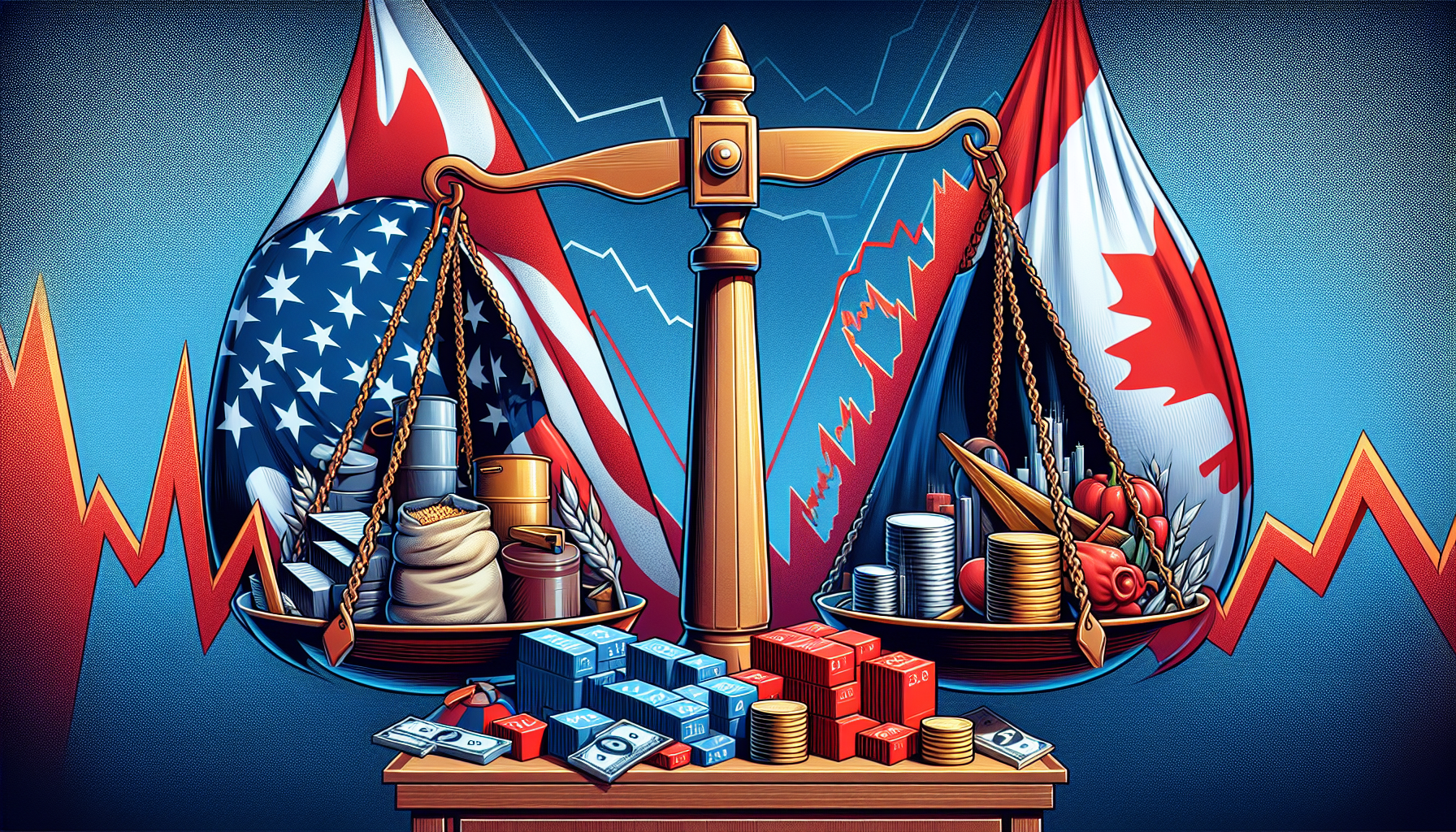

Trump's Trade War with Canada: Market Reactions and Economic Impact
Donald Trump has once again escalated trade tensions with Canada by announcing a 25% tariff on Canadian steel and aluminum imports. However, this decision was later reversed following negotiations. The market reacted sharply, with the Dow Jones Industrial Average dropping 633 points at one point before recovering slightly. Auto and industrial stocks suffered losses, while US steel manufacturers saw gains.
1. Trump's Tariff Announcement and Immediate Backlash
Donald Trump took to Truth Social to announce a 25% tariff on Canadian steel and aluminum, raising the total tariff rate on these imports to 50%.
- He justified the move as a response to Canada’s reported plans to restrict electricity exports to the US.
- Trump even threatened to declare a national emergency over energy security.
- The tariffs were scheduled to take effect on Wednesday.
However, by the afternoon, Trump's trade advisor Peter Navarro announced that these tariffs would no longer be implemented, following a deal reached between US Commerce Secretary Howard Lutnick and Canada.
2. Market Reactions: Stocks Plunge, Then Recover
The initial tariff announcement sent shockwaves through the stock market.
- The Dow Jones fell by 633 points at its lowest before recovering to close down 478 points.
- Automakers like General Motors and Ford saw a 4% loss as steel and aluminum costs are crucial to their business.
- The industrial sector dropped by 2%, showing widespread concerns.
Interestingly, US steelmakers benefited from the news.
- US Steel (X) and Nucor (NUE) saw 3% gains, as domestic steel producers expected less competition from Canadian imports.
3. Trump's Trade War Strategy: Canada, Mexico, and China in the Crosshairs
Trump’s trade policies extend beyond Canada.
- Earlier this month, he temporarily imposed a 25% tariff on imports from Mexico and Canada, later suspending the decision until April 2.
- In retaliation, Canadian Prime Minister Justin Trudeau announced a 25% tariff on $155 billion worth of US goods.
Trump warned that if Canada did not drop its retaliatory tariffs, he would raise tariffs on Canadian cars—a move that he claimed would "shut down Canada’s auto industry."
These moves align with Trump's broader strategy of using tariffs as leverage in diplomatic and trade negotiations, particularly concerning energy policies, border security, and manufacturing.
4. Economic and Political Ramifications
Increased costs for American consumers:
Higher tariffs on imported materials typically raise the prices of cars, groceries, and other goods—a concern Trudeau highlighted.Threats to US-Canada Trade Relations:
Canada and the US have long enjoyed strong trade ties. However, uncertainty caused by sudden tariffs could weaken this relationship.Impact on the 2024 Presidential Race:
Trump’s aggressive trade policies may appeal to some voters, particularly in manufacturing-heavy states, but they also risk alienating businesses and financial markets.
5. What Comes Next?
After walking back his tariff decision, markets stabilized, but uncertainty remains.
- Will Canada proceed with its own tariffs on US goods?
- Could Trump raise tariffs on Canadian automobiles in April?
- Will investors continue to react negatively to Trump's trade strategies?
While Trump's tariffs are intended to protect US industry, their short-term impact on markets and trade relations raises significant economic concerns.
For now, investors and businesses remain on edge, watching closely for the next move in this ongoing trade war. 🚨